Unfoxing Judicial Review of Agency Policy Reversals or “We Were Told to Like the New Policy Better” is Not a Good Reason to Change

Read Full Article (PDF)


Introduction

The Trump administration has been conducting a scorched- earth campaign to reverse the regulatory handiwork of the Obama administration. This spectacular change in direction did not occur because federal agencies suddenly gained new information and expertise on the day of President Trump’s inauguration. Instead, the driving motivation has been political and ideological—e.g., to put it mildly, the current administration strikes a different balance between business and environmental/health concerns than its predecessor. In one obvious sense, this change in administrative direction is nothing new—the Obama administration reversed Bush administration policies, and the Bush administration reversed Clinton administration policies, etc. That said, the scope and intensity of the Trump administration’s efforts to roll back the Obama years—combined with what might reasonably be called a general assault by political forces on expert administration—provides a natural occasion to reflect on how administrative law ensures the legality and rationality of agency policy reversals with political motivations.

Richard W. Murphy*

*AT&T Professor of Law, Texas Tech University School of Law. Many thanks to Professors Sidney Shapiro, Louis Virelli, Bryan Camp, and Alex Pearl for their help with this Article.


Uniform Climate Control

Read Full Article (PDF)


Introduction

On July 22, 2019, outspoken climate change advocate Al Gore found himself sitting second chair once again as a bill was signed into law. This time he sat not beside the President of the United States, but rather beside the Governor of New York. Moments after Governor Andrew Cuomo rapidly scribbled his name on the landmark Climate Leadership and Community Protection Act, he passed the pen and paper to a grinning Gore. A resident of Nashville, Tennessee who holds no elected office in the State of New York, Gore’s signature had precisely zero legal effect—it served ceremonial and publicity purposes only. Among many other ambitious goals, the celebrity-endorsed state law he giddily signed man- dates that New York achieve one hundred percent carbon neutrality by 2050. Al Gore called it “the most ambitious, the most well- crafted legislation in the country.” But he was far from its only

fan; the law drew widespread praise across the climate policy community—and even from the Hulk.

New York State’s bold legislative steps to confront climate change came only months after New York City enacted its own “Green New Deal” on the municipal level to reduce greenhouse gas emissions in the city. In April 2019, in celebration of Earth Day, the New York City Council passed the Climate Mobilization Act, a package of ten bills designed to keep the city on pace with the reductions set by the Paris Climate Agreement.8 One Councilmember applauded his work as “the single largest carbon reduction ef- fort in any city, anywhere.” Some of the media, however, focused on the law’s provisions related to environmentally conscious food choices and procurement, claiming the city banned its most famous culinary contribution—the hot dog.

New York’s state and city lawmaking exemplifies a multijurisdictional approach to the global climate crisis that has taken hold in various places across this and other countries. We are ushering 

in the next generation of environmental laws, and those laws will largely be authored not by international negotiators or federal legislators, but by state and local officials. Where do these lawmakers, many of them part-time civil servants, look for guidance on bill language to properly address perhaps the most complex environmental challenge of our time? Unfortunately, the most influential provider of model legislation has to this point aligned against proactive climate action. A growing body of resources, including model codes and ordinances, could help fill the void. This work aims to draw attention to the imbalance in model lawmaking. It then examines the growing resources facilitating proactive climate change law at the state and local levels. Finally, it asks how well this model-law ecosystem fits with the principles of federalism in the context of the evolving environmental legal landscape.

Anthony Moffa*

Associate Professor of Law, University of Maine School of Law. The author would like to thank Thea Johnson, Sarah Schindler, and William Sedlack for their thoughtful comments on earlier drafts. Special thanks are due to Michael Gerrard and John Dernbach for their pathbreaking work on model climate policy and their guidance on this theoretical treatment of it. This Article also benefited from the Colloquium on Environmental Scholarship at Vermont Law School and the New Directions in Environmental Law Conference at Yale Law School and Yale School of the Environment. All errors are the author’s alone.


Balancing Religious Liberties and Antidiscrimination Interests in the Public Employment Context: The Impact of Masterpiece Cakeshop and American Legion

Read Full Article (PDF)


Introduction

At the heart of national debate in recent years is the balance between religious liberty and antidiscrimination interests. The Supreme Court energized the debate in its latest Free Speech and Establishment Clause decisions in Burwell v. Hobby Lobby Stores, Inc., Masterpiece Cakeshop, Ltd. v. Colorado Civil Rights Commission, and American Legion v. American Humanist Association. These decisions pushed the pendulum towards greater protection of religious liberties and opened the door to new context-specific tests for how the Establishment Clause will interact with the broader range of interests protected by the Free Exercise Clause. This is especially significant in the public employment context, where government employers must balance requests for religious freedom accommodations with Establishment Clause concerns.

Next, this Article details the importance of the protection paradigm operating in the employment context generally, and the public employment context in particular. As to the latter, this Article outlines the concerns of a government employer as they relate to balancing claims for religious liberties with the employer’s obligations pursuant to the Establishment Clause. It details the unique context of a governmental entity as both sovereign and employer and argues for the importance of a situation-specific standard in these situations. To put this context in perspective, this Article reviews the Establishment Clause jurisprudence that led to the Supreme Court’s most recent decision in American Legion. After examining American Legion itself, this Article argues that the Court has opened the door to, and indeed indicated its preference for, the development of more context-specific tests. This is especially preferable in the public employment context and in light of the currently prevailing protection paradigm.

Finally, this Article concludes by analyzing different potential methods for trying to balance religious liberty claims with antidiscrimination concerns, and thus Establishment Clause concerns, in public employment. This Article argues for a combination of relevant tests that balances the magnitude and likelihood of third- party harm, substantiality of burden to religious liberty, and availability or prevalence of secular accommodations. This test provides room for factual inquiry and context-specific value judgments, while still allowing a workable framework, the results of which are sufficiently predictable that employers and employees are not left to wonder about the boundaries by which their relationship should be governed.


Brenda Bauges*

 * Visiting Professor at the University of Idaho, College of Law. Professor Bauges was previously, from 2018–2020, an Assistant Professor at Concordia University School of Law and Director of Externships, Mentorship, and Pro Bono Programs. Prior to joining Concordia Law, Professor Bauges practiced in employment law, representing both government entities and private organizations. She is grateful for the help of her research assistant, Gwen King, and her colleagues for their encouragement and advice. She would especially like to thank Aaron and Alexander Bauges for their unwavering support and patience.


May Book 2020: Acknowledgements


Acknowledgements

Volume 54 of the University of Richmond Law Review quite possibly had an academic journey unlike any other. Who could have predicted as we said our goodbyes for spring break, it would be the last time we would work together in person? Volume 54 gave so much to have nearly everything taken by the COVID-19 pandemic. On September 20, 2020, I write these Acknowledgments—four months after the original May Book publication date—to those Law Review members I never had the chance to thank.

As staff members, Volume 54 showed grit, resilience, and compassion. In what would become a record publication year for the University of Richmond Law Review, Volume 54 dutifully and gracefully carried a heavier burden than most. Such a rigorous experience inspired the Volume 54 Executive Board and me, as Editor-in-Chief, to create a different repute: one focused on amelioration, mentorship, and benevolence. With this in mind, we started our 3L year. In Fall 2019, Volume 54 published high-quality articles, hosted a timely and thoughtful Symposium, and created life- long friendships. It was during this time we saw our tireless work turn into tangible things; an experience none of us will forget. Despite the hours of work, our support and respect for each member of Law Review never wavered. For that, I have never been so grateful.

To my Executive Board, I cannot thank each of you enough. First, I would like to thank my right hand and Executive Editor: Thomas Dorsey. Your calm and thoughtful nature kept me grounded in the most unprecedented of times. You taught me to consider thoroughly not only my own perspective but that of others. Your high expectations of not only me but all of those you work with inspired each of us every day. Thank you to the Senior Notes and Comments Editor: Jon Roellke. Your inquisitions kept us on our toes and in high spirits. Certainly, we will all miss the flurry of unanswerable Bluebook questions, but mostly we will miss your infectious positivity. Thank you to the Lead Articles Editor: Allison Bohan. Your strength gave us hope while your quick wit and humor lifted us up in tiresome times. Thank you to the Annual Survey Editor: Matthew Pangle. I felt humbled to have your un- wavering support, especially in moments of uncertainty. Thank you to the Symposium Editor: Athena Dufour. Because of your commitment to excellence, the Law Review put on arguably its most inspiring Symposium. Thank you to the Managing Editor: Kellen Shearin. Your hard work allowed us to publish some of our most challenging articles. Thank you to the Online Editor: Grace Nichols. With your guidance, the Online edition is reaching new heights.

To the Volume 54 Editorial Board, I thank you for your tireless work during publication. To the 2L staff, thank you not only for your hard work but for hours spent listening to and learning from Volume 54. We hope to have served you well. To my parents, I thank you for your endless love and patience as I toiled through such a challenging experience. You say you are proud to be my parents, but I am even more proud to be your daughter. To Glenice, there are not enough words to thank you for your mentorship. Your trust and support meant everything to me. Without your guidance, the University of Richmond Law Review would simply be no more.

As Editor-in-Chief, I expected to become an expert in cite checking, Bluebooking, and proofreading. What I did not expect was to be so touched by my experience leading the University of Richmond Law Review. I will forever feel honored and humbled to have had the faith and trust of the law school’s most capable students. You all taught me to see beyond my own expectations, even those I had of myself. At our graduation brunch, I would have told the members of Volume 54 how grateful I am for this experience and how much it has changed me for the better. I hope one day I get to do so in person.

Volume 54 could not have left the University of Richmond Law Review in more capable hands. Taking over a high capacity journal is never easy and certainly is not so during a pandemic. Thank you for your hard work finishing this publication that COVID-19 delayed. I deeply hope that this academic year Volume 55 gets to experience the comradery we all miss so much.

Finally, it is my honor to present to you the fourth and final issue of Volume 54.

Ashley R. Phillips

Editor-in-Chief, Vol. 54


Gender Stereotypes and Gender Identity in Public Schools

Gender Stereotypes and Gender Identity in Public Schools

Read Full Article (PDF)


Introduction

In recent years, claims brought by transgender students requesting accommodations from a public school have been framed under Title IX of the Education Amendments Act of 1972, which prohibits discrimination on the basis of sex in any educational program or activity that receives federal funding. Although the statutory language does not specifically include discrimination on the basis of gender identity, a number of advocates argued that gender identity was encompassed by the term sex, and a number of federal courts agreed. More notably, in May 2016, the Department of Education (“DOE”) issued a “Dear Colleague” letter interpreting the statutory language to include discrimination on the basis of gender identity, specifically noting that Title IX thus prohibits discrimination against transgender students. Given the seemingly changing tide in agency interpretation, as well as an increasing number of courts agreeing, the statutory argument dominated new claims.

With the change in presidential administrations, however, came a sharp about-face in agency reading of the statute. In February 2017, the DOE withdrew the prior letter, and subsequently announced that the Department would no longer represent transgender students and their claims. At around the same time, then-Attorney General Jeff Sessions issued a memo stating that the similar statutory language forbidding employment discrimination because of sex in Title VII of the Civil Rights Act of 1964 did not apply to discrimination against transgender employees. The Trump administration agencies presented a united front that the term “sex” meant solely biological sex, and not gender identity.

Given the changing interpretation of Title IX, both statutory and constitutional arguments supporting the right of public school students to express their gender in any manner contrary to traditional gendered norms have renewed vitality. In the decades since Stonewall, students facing school discipline for nonconforming gender presentation that violated school dress codes have attempted to challenge the dress codes as violating their First Amendment free expression rights. Tracing these arguments is not only helpful as a historical exercise, but also to present alternative arguments under an unsympathetic presidential administration and Supreme Court. In today’s world in which the Trump administration targets transgender students, employees, and service members, one strategy is to embrace gender nonconformity for cisgender, transgender, and nonbinary students all at once, in the hopes that thinking about the expression rights of students will be a more fruitful approach than just relying on Title IX.

Dara E. Purvis*

*Professor, Penn State Law; J.D., Yale Law School; M.Phil., University of Cam- bridge; B.A., University of Southern California. Thanks to Athena Dufour, Chris Marple, and Kellen Shearin for extremely helpful organizing and editing.


Building Queer Families and the Ethics of Gestational Surrogacy

Building Queer Families and the Ethics of Gestational Surrogacy

Read Full Article (PDF)


Introduction

Throughout American history, government has used the law to deny some citizens the right to create or sustain families with children to show contempt for those citizens. As LGBT people fought for dignity, equality, and justice from Stonewall to the present, one of the greatest success stories of that fight is the change in how the law defines and protects families. Into the 1990s, people in same-sex relationships had cause to fear that their sexual orientation could be used to deprive them of custody of their children. Now, many states, through statute or case law, routinely recognize two parents of the same sex for a child, and some explicitly forbid discrimination on the basis of sexual orientation in adoption. Still, others are slowly taking steps to level the assisted reproduction playing field for same-sex couples through their laws and policies.

This Essay focuses on a particular aspect of the world of family building for LGBT people, which is the use of gestational surrogacy to create families with children. Within the LGBT community, gay men are the most frequent users of this practice because they must find a woman willing to gestate a child if the fathers desire genetic connection. The ethical concerns about hiring a gestational surrogate increase when the arrangement involves cross-border reproductive travel, sometimes pejoratively referred to as “reproductive tourism,” in which commissioning or intended parents1 from a developed nation hire a surrogate from a developing nation to gestate a child.

Kimberly Mutcherson*

*Co-Dean and Professor of Law at Rutgers Law School in Camden.


LGBTQ Rights in the Fields of Criminal Law and Law Enforcement

LGBTQ Rights in the Fields of Criminal Law and Law Enforcement

Read Full Article (PDF)


Introduction

Although not the first time LGBTQ folks fought back against police authority, the Stonewall Riots or Stonewall Rebellion, is commonly referred to as the genesis of the LGBTQ Pride movement in the United States. A lesser-known fact is that these riots were led by the transgender community—a community which today faces unheard of rates of violence, especially transgender women of color. Transgender women of color are murdered in the United States at rates that continue to increase. This Essay will explore unprecedented violence against the transgender community and the LGBTQ+ community at large, especially as it relates to the action and inaction of the criminal legal system. In an attempt to move beyond mainstream activism and research, this Essay will examine queer criminology, which explores the experiences of the LGBTQ+ population as victims, offenders, and professionals in the criminal legal system both in the United States and abroad.

In couching this discussion within the theoretical and practical application of queer criminology, this Essay will highlight the marginalization of LGBTQ+ folks and explore the impact that intersectionality has on the experiences of the LGBTQ+ community with special attention on law enforcement. For example, queer criminology studies the persistent distrust that the LGBTQ+ community has of police5 as well as the experiences of LGBTQ+ identified police officers and other agents within the criminal legal system. Further, as the current Administration continues to roll back the rights and liberties of the LGBTQ+ community, there must be a focus on how past and present policies continue to negatively impact LGBTQ+ people at the micro and macro levels. This Essay will also pay special attention to LGBTQ+ youth and transgender people of color.

Carrie L. Buist*

*Assistant Professor, Grand Valley State University School of Criminal Justice.


Framing Legislation Banning the “Gay and Trans Panic” Defenses

Framing Legislation Banning the “Gay and Trans Panic” Defenses

Read Full Article (PDF)


Introduction

Since the 1960s, criminal defendants who have attacked (and in most cases killed) lesbian, gay, bisexual, transgender, and queer (“LGBTQ”) victims have relied on the “gay and trans panic” defenses in order to avoid conviction or to receive lesser punishment. Contrary to what the name suggests, the gay and trans panic defenses are not freestanding legal defenses. Rather, over time, defendants have invoked gay and trans panic concepts to support one of three well-established legal defenses: (1) provocation, (2) insanity (or diminished capacity, and (3) self-defense (or imperfect self-defense). Depending on which of these defenses gay and trans panic concepts are being used to support, if successfully raised, a defendant who attacked or killed a LGBTQ victim could receive a lesser charge or sentence, or avoid conviction and punishment altogether.

This Article, prepared for the University of Richmond Law Review symposium commemorating the fiftieth anniversary of the Stonewall Riots of 1969, uses the Stonewall Riots as an opportunity to analyze and theorize the political dimensions of legislation banning the gay and trans panic defenses. As a moment of resistance to state violence against LGBTQ people, the Stonewall Riots are a useful platform to examine the historical and current relationship between the state and the gay and trans panic defenses. Drawing on original readings of medical literature, this Article brings the historical role of the state in the growth of gay and trans panic to the surface and discusses how gay and trans panic ideas blur the distinction between state and private violence.

Jordan Blair Woods*

*Associate Professor of Law, University of Arkansas School of Law, Fayetteville. The Author is thankful for the helpful discussions and suggestions from Beth Colgan, Erin Collins, Laurent Sacharoff, and Beth Zilberman. The Author is also grateful for the excellent research assistance from Hannah Hines and the University of Arkansas School of Law library staff, and especially Cathy Chick and Steven Probst. Thank you to the editors and staff at the University of Richmond Law Review for their careful edits, insightful suggestions, and work.


From the Mattachine Society to Megan Rapinoe: Tracing and Telegraphing the Conformist/Visionary Divide in the LGBT-Rights Movement

From the Mattachine Society to Megan Rapinoe: Tracing and Telegraphing the Conformist/Visionary Divide in the LGBT-Rights Movement

Read Full Article (PDF)


Introduction

From the beginning of the LGBT civil rights movement, there has been an intracommunity debate concerning strategies and tactics to effect legal and social change. On one end of the spectrum, the lesbian and gay organizations of the 1950s—the Mattachine Society and the Daughters of Bilitis—advocated an assimilationist strategy that sought tolerance rather than full acceptance and integration. The tactics to affect this strategy are best described as conservative and conventional—to look and act as “straight” as possible in order to convince courts, legislatures, and the public that lesbians and gay men should be left alone rather than fired from their jobs and criminalized for their intimate conduct. On the other end of the spectrum, the protesters at the Stonewall Inn on June 27, 1969, advocated for liberation along many axes—gender, race, sexual orientation, gender identity, class. The Gay Liberation Front, inspired by the Stonewall Riots and formed shortly thereafter, embodied this liberation-based strategy. Its tactics are best de- scribed as confrontational, intersectional, and anti-assimilationist. This Article will refer to these two approaches as Conformist and Visionary.

Presumably, both the Conformist and the Visionary approaches shared the general end goal of equality for LGBT people; what equality looked like to each group reflects the differences between them. The differences between their strategies and tactics can be generalized as ones of imagination and vision.

The Conformist and Visionary divide has permeated the LGBT community’s civil rights campaign through the present day, as has the debate among scholars and advocates about the “best” approach to effect lasting change. While most scholars discuss the benefits and drawbacks of these two approaches vis-à-vis the law and society writ large and propose that one take precedence over the other, this Article explores how this decades-long intracommunity divide—the conversation among activists and scholars within the LGBT community—might shape the future of the movement. Rather than attempt to settle on the “best” approach, then, this Article instead focuses on the impact of the dynamic created by the intracommunity debate vis-à-vis the law and society writ large. It asks and answers the questions: What work did the Conformist and the Visionary approaches do to support the rise of LGBT rights in the United States? And, what work do they continue to do today, so that we may anticipate the growth and impact of LGBT rights on education law and employment law in the future? In doing so, it does not make a normative or strategic judgment concerning either approach. Rather, its goal is to expose and explore what this Article calls the transcommunity dialogue—a communicative pathway between the LGBT community and society at large, which is informed by the Conformist-Visionary dynamic.

The Article proceeds in four parts. Part I describes the historic trajectory of the Conformist and the Visionary approaches. It then sketches the scholarly debate concerning these approaches. Part II frames the Article within social science literature on the importance of intragroup disagreement in social justice movements, which necessarily implicates intergroup dynamics. Part III traces these approaches to two current-day LGBT legal issues: (1) Title VII’s promise of pay equity as illustrated by the U.S. Women’s National Soccer Team pay equity lawsuitand Title VII’s promise of nondiscrimination as illustrated by the sexual orientation and gender identity (“SOGI”) lawsuits currently pending at the United States Supreme Court, and (2) Title IX’s promise of educational equity “on the basis of sex” as illustrated by the legal battles over transgender elementary school children seeking to access sex-segregated facilities that align with their gender identity. Part IV adds to the scholarly conversation about this intracommunity de- bate by interrogating the dynamic created by the intracommunity debate itself and its relationship with and impact on these contemporary Title VII and Title IX legal battles. The Article concludes by predicting that both the Conformist and the Visionary approaches will continue to contribute to equality gains for the LGBT community. It attempts to telegraph the work that these approaches have done in the past to the work that they might do in the future.

Kyle C. Velte*

* Associate Professor, University of Kansas School of Law. Many thanks to the Univer- sity of Richmond Law Review for organizing this important symposium and for including me among the outstanding scholars, activists, and practitioners who presented. Thanks also to my research assistant, Delaney Hiegart. This Article is dedicated to the Conformists and Visionaries who came before us; the arc of the moral universe may be long, but it is bending toward justice faster because of your work at a time when that work was tremendously risky, scary, and difficult. We stand on your shoulders. 

*


Riding the Storm Out After the Stonewall Riots: Subsequent Waves of LGBT Rights in Family Formation and Reproduction

Riding the Storm Out After the Stonewall Riots: Subsequent Waves of LGBT Rights in Family Formation and Reproduction

Read Full Article (PDF)


Introduction

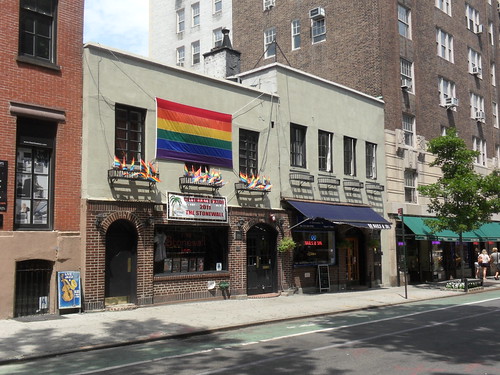
In 1969, the Stonewall Riots took place at the Stonewall Inn in Greenwich Village, New York City. Many consider this the most important event leading to the gay rights and modern LGBT movement in the United States. Prior to the Stonewall Riots, LGBT people primarily had children within heterosexual relationships. LGBT individuals always formed families whereby children were parented with gay parents, but how common it was and what the families looked like prior to the Stonewall Riots was difficult to determine because of how secretive and hidden they had to be about it. Accounts of lesbian women reveal that they usually had children as the result of heterosexual marriages, sex work, or relationships with women who had children from these same means. Unfortunately, prior to 1970, LGBT people who had children in heterosexual marriages often would lose custody when they left those marriages for a gay relationship. 

After the Stonewall Riots, LGBT families started to ride out the storm, the result being that LGBT rights in family formation and reproduction roughly can be divided into four waves consisting of: (1) the initial subtle wave of the 1970s to 1980s, (2) a growing wave in the 1990s, (3) a massive wave of growth and change from 2000 through 2019, and (4) the yet to come 2020 wave and beyond.

This Article will explore how LGBT family formation has evolved since the Stonewall Riots. The primary means for LGBT families to build their families, other than traditional intercourse between a man and a woman, were and continue to be through adoption and Assisted Reproductive Technologies (“ART”). In the world of assisted reproduction, typically a lesbian couple or a single woman use donor sperm, either known or unknown, coupled with artificial insemination. Gay men traditionally utilize a traditional or true surrogate (who is genetically related to the child) along with artificial insemination using the sperm of an intended father. As medical technologies in the field of reproduction developed, especially the development of in vitro fertilization (“IVF”) and embryo transfers, more men turned towards assisted reproduction via the use of a gestational carrier along with donor egg, either known or unknown, combined with the sperm of one intended father. This gestational carrier process is less risky than using a true surrogate who is the genetic mother. Additionally, more lesbian couples started to utilize reciprocal IVF whereby one mom contributes her egg, becoming the genetic mom, while the other gestates the embryo formed from that egg along with donor sperm. Overtime, medical advances have opened wider doors for LGBT family formation options.

Colleen Marea Quinn*

* Director and Owner of the Adoption & Surrogacy Law Center at Locke & Quinn, Richmond, Virginia. Fellow and Past-President of the Academy of Adoption & Assisted Reproduction Attorneys, Member of the LGBT Bar Family Law Institute, Virginia Equality Bar Association, and Virginia Family Law Coalition and Equality Virginia. Ms. Quinn acknowledges and appreciates her intern, University of Richmond Law student, Victoria Pivirotto in providing research and drafting assistance with this Article.